
The increase to Calgary's education property tax is about double Edmonton's.
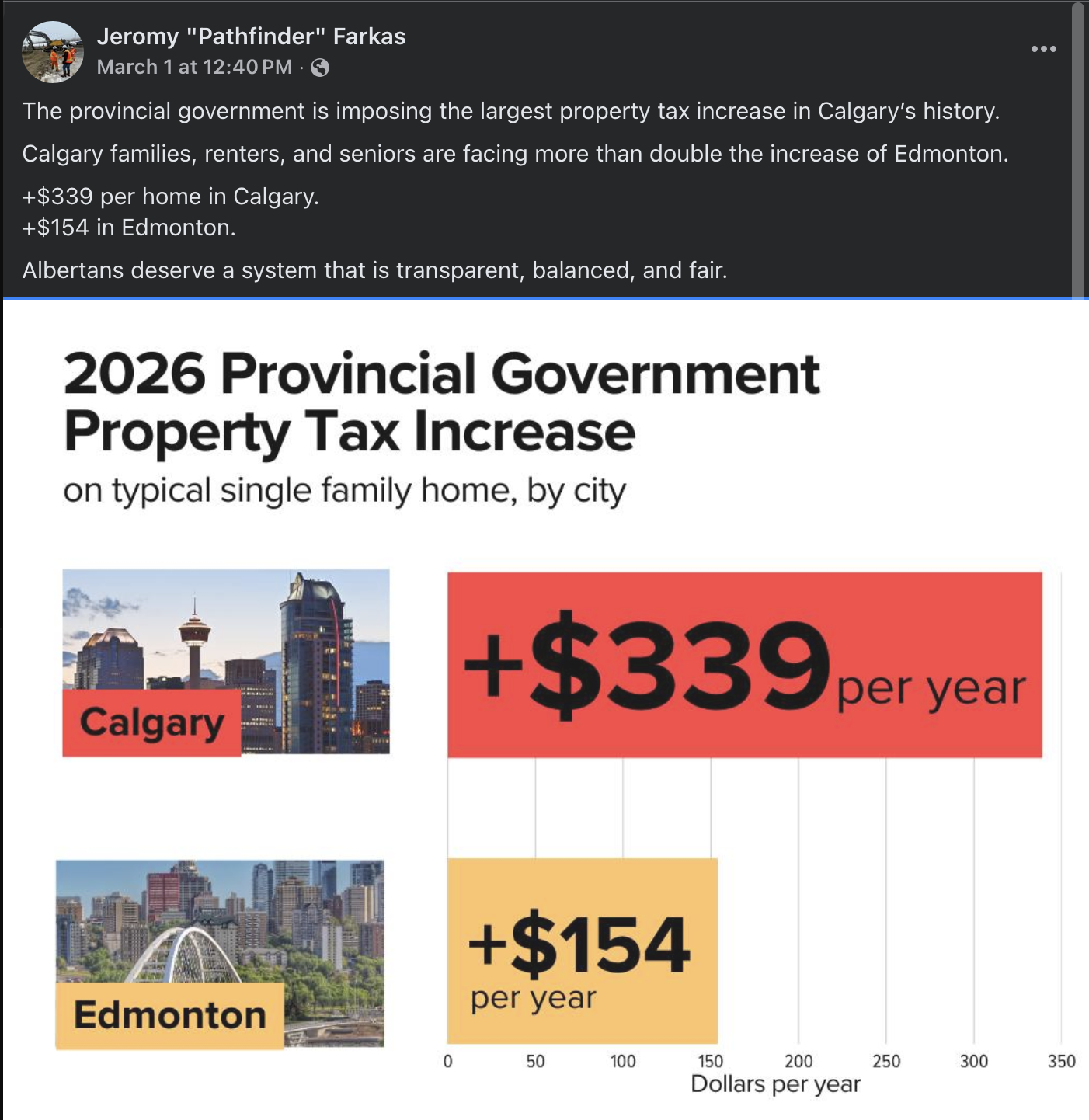
Calgary's mayor says this is an equalization scheme put in place by the “Edmonton provincial government.”
Let's do the math.
Your bill has two parts
First, your property tax bill has two parts.
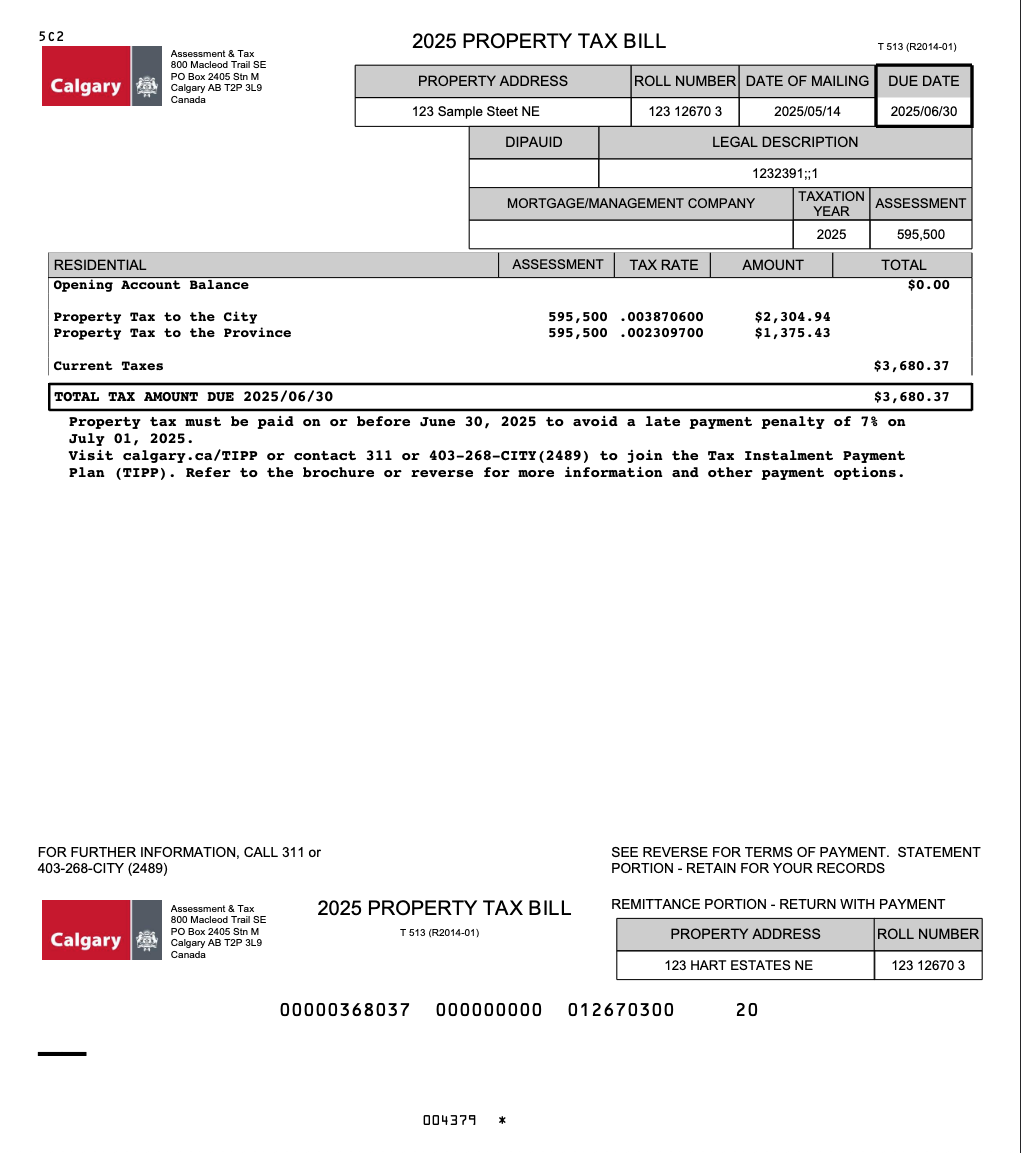
There's the city portion, set by the city, and pays for things like garbage pickup, snow clearing, police.
And then there's the provincial portion, called the education property tax. The rate is set by the province, the money goes to the province, but the city is fully responsible for collecting it from you.
In Calgary, 42% of your bill is sent to the provincial coffers this way.
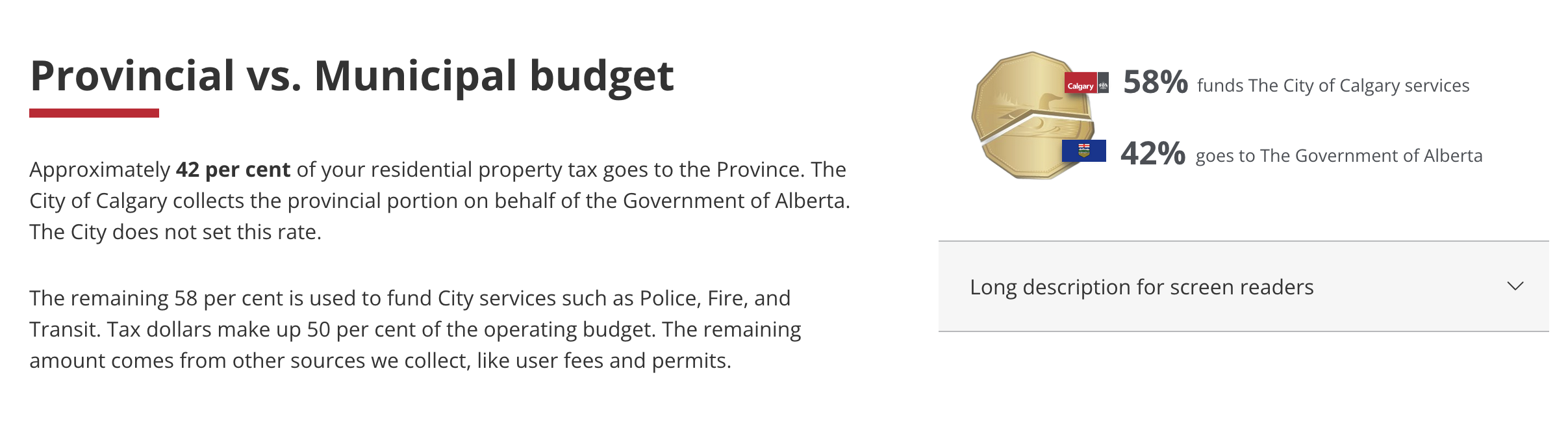
That number's not random. It's math.
How education property taxes work
Education property taxes work almost exactly like your regular property taxes, and I've got a previous video explaining those. The difference with education taxes is that they're province-wide.
First, the Government of Alberta sets the education budget. For 2026, that's $10.8 billion.
The government has decided that 1/3 of that should come from property taxes. So, the province needs to collect $3.6 billion.
Now, the key step. They divide that $3.6 billion across every property in Alberta based on the value of those properties. Bigger property value, bigger bill.
Calgary is worth more
The total value of all properties in Calgary is $457 billion, compared to $220 billion in Edmonton. It's double.
There were 614,000 assessment notices sent by Calgary, compared to only 440,000 sent by Edmonton.
The average single-family home in the Cowboy City is assessed at $706,000, 30% more than Edmonton's $492,000.
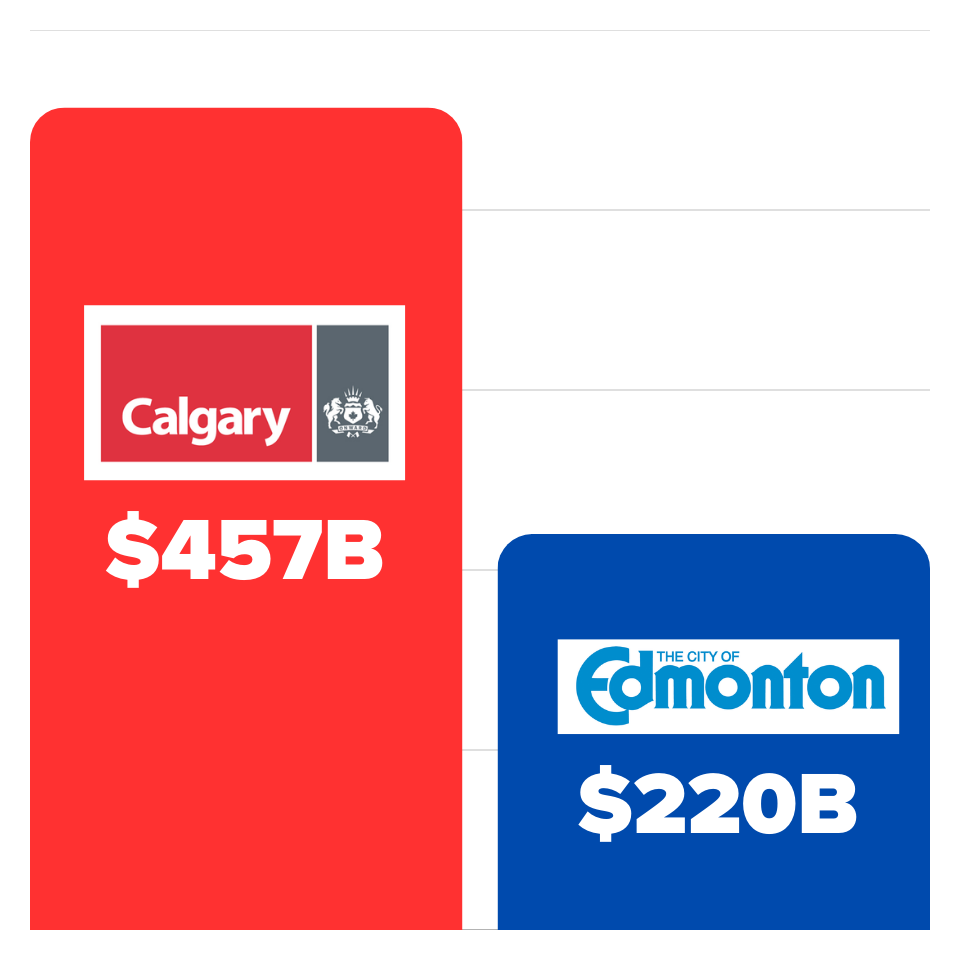
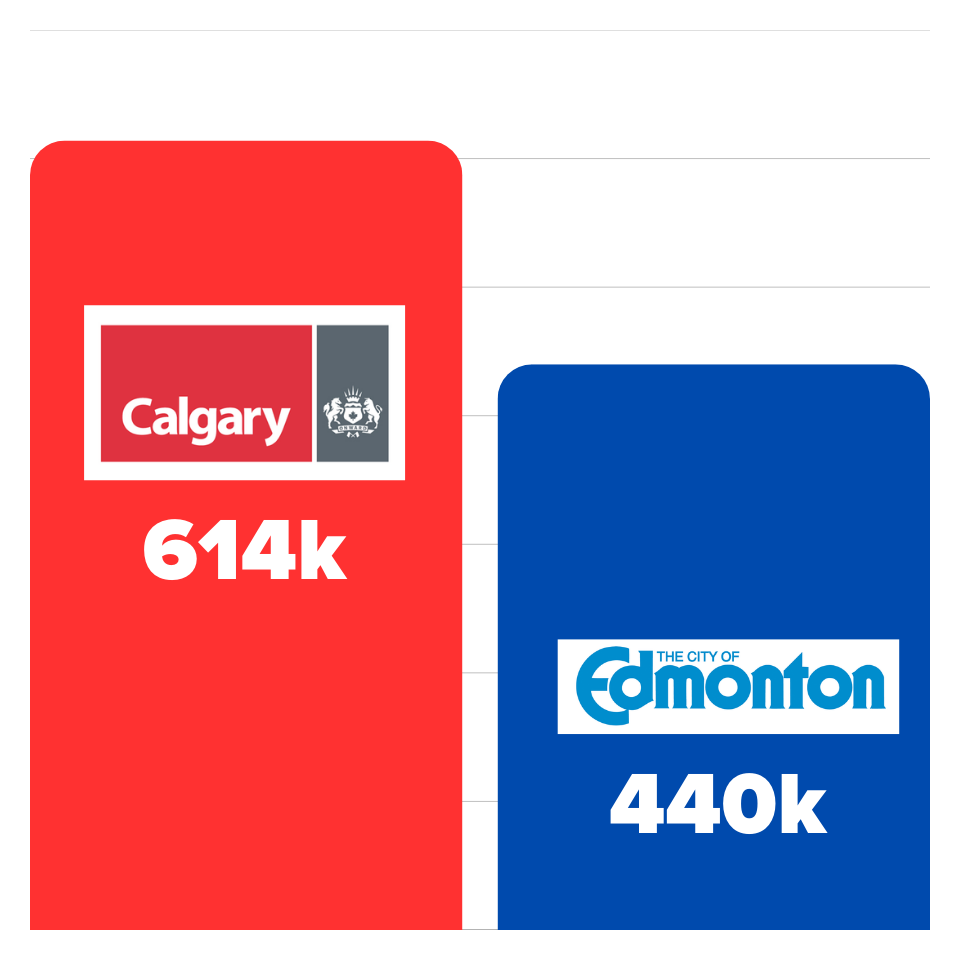
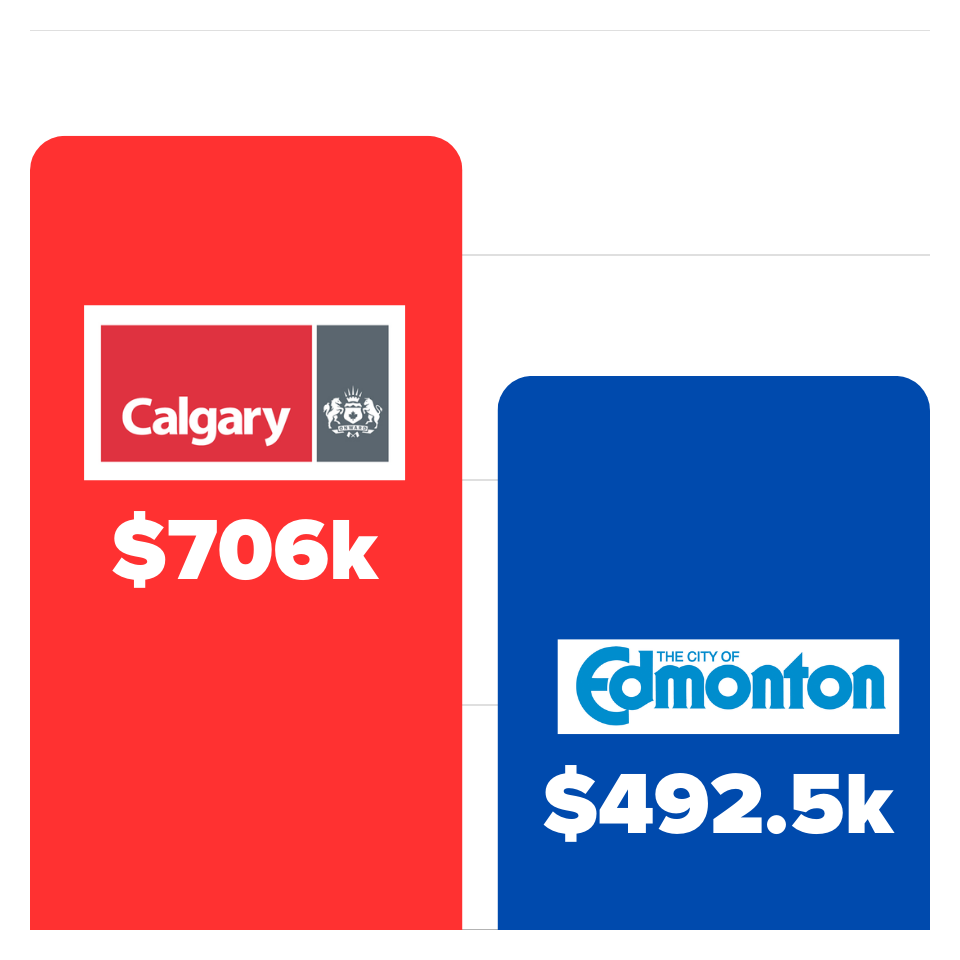
Less property value, less tax. Math.
When you zoom out to the whole province, 35% of education property taxes are collected from Calgary, compared to 18% from Edmonton.
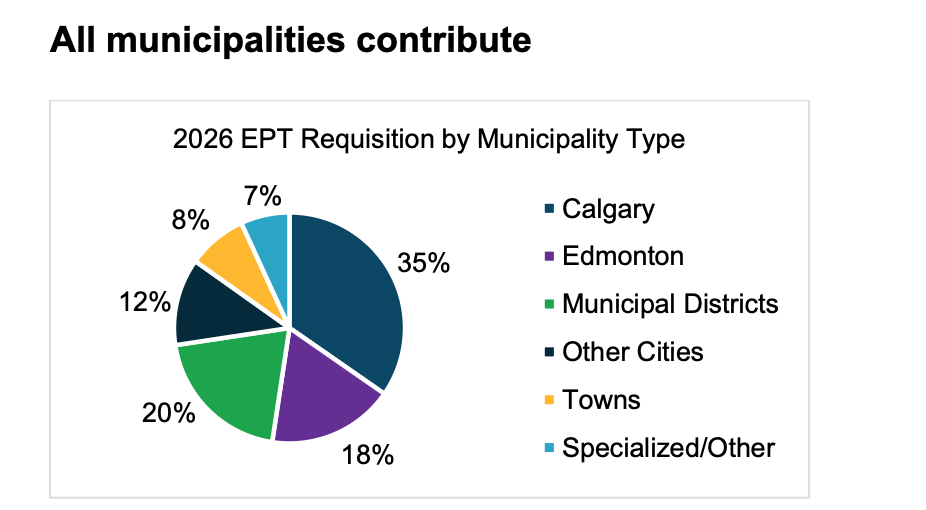
This is because, especially factoring in the business presence, Calgary is just worth more than our bargain-bin city.
(With the much better hockey team.)
This still isn't equalization
Even if you argue that paying taxes based on wealth is inherently unfair (which is only two steps away from “all taxation is theft,” but you do you), this still isn't “equalization.”
In 2026, the province of Alberta will collect $1.2 billion in education property taxes from Calgary. And then it will send $2.2 billion in operational funding to Calgary school boards.
You can't call something a wealth transfer if you're getting more than you give. That's not math.
To be clear, though, when you factor in all revenues like income taxes, there is absolutely a substantial equalization happening in Alberta. It's from every city to every rural area. (Notable exception: Fort McMurray.)
It's a conversation worth having, but it's not this conversation.
Let's call this what it is
Jeromy Farkas is telling you that education property taxes in Calgary are an equalization. So, let's call this what it is.
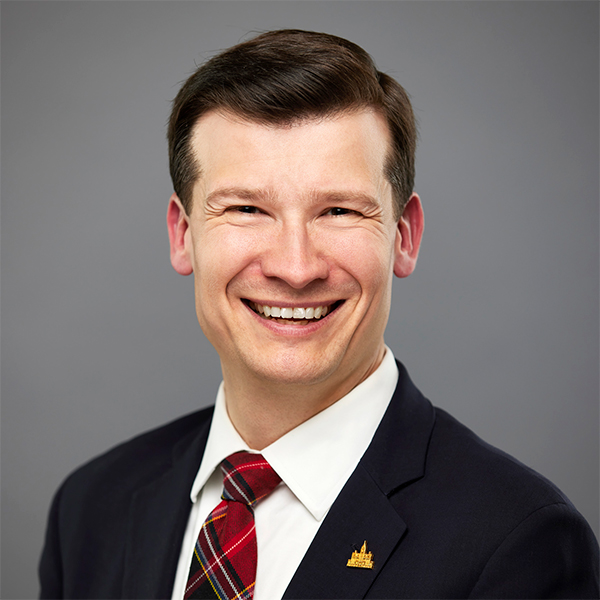
This is a form of equalization, a transfer payment taken from Calgary families and redirected elsewhere.
Jeromy Farkas, in a video posted to Twitter
On this, I defer to noted public policy expert Hilary Duff.

If you can't do the math, then get out of the equation.
Hilary Duff
The final question, "are education property taxes a good idea?", is left as an exercise for the reader.
Spoiler alert: they're not.
Get my news and takes in your inbox
Don't let algorithms control whether you see my latest video or article. We don't need to include Mark Zuckerberg in our relationship.
Free. Emails from Troy Pavlek when I publish something new. Unsubscribe any time.
That didn't go through. Try again in a minute, or email [email protected].
You're in. Thanks for subscribing!

